Why Is It Spelled So Many Ways?
Mah Jongg. Mahjong. Mah-Jong. Mahjongg. All the same game — but the spelling depends on who you ask, when they learned it, and which version they play. Here's how the confusion started and what the differences actually mean.
Where the Name Comes From
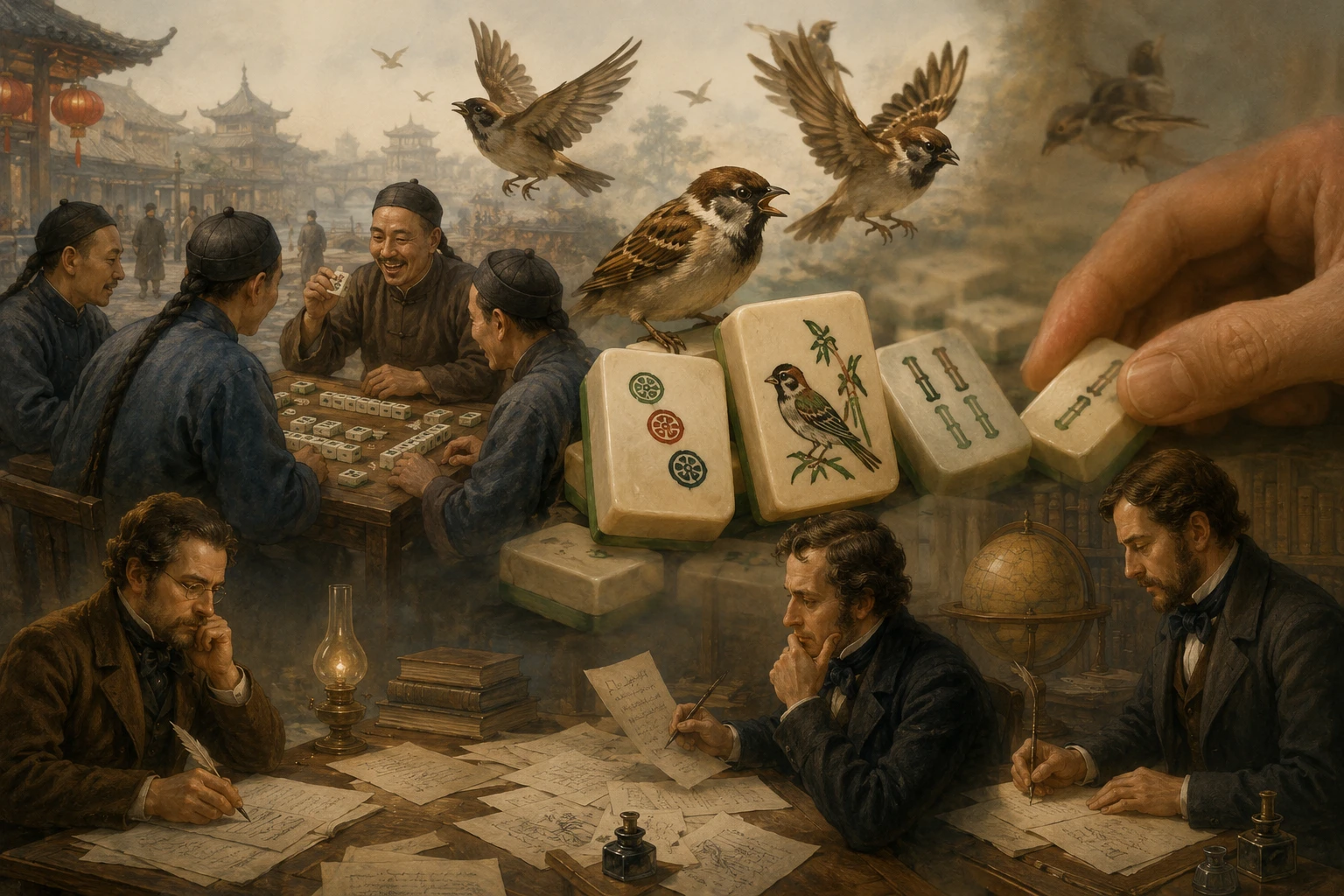
The game originated in China, most likely during the Qing Dynasty in the mid-to-late nineteenth century. In Mandarin, it's called 麻将 (májiàng), a term whose origin is still debated — it may refer to the chattering sound the tiles make when shuffled, evoking the chatter of sparrows. In Cantonese it's 麻雀 (màhjeuk), which literally means sparrow, reinforcing that bird imagery.
Neither romanization maps cleanly to English, which meant that from the very beginning, every Western writer who tried to write down the name had to make a judgment call — and they didn't all make the same one.
The 1920s American Craze
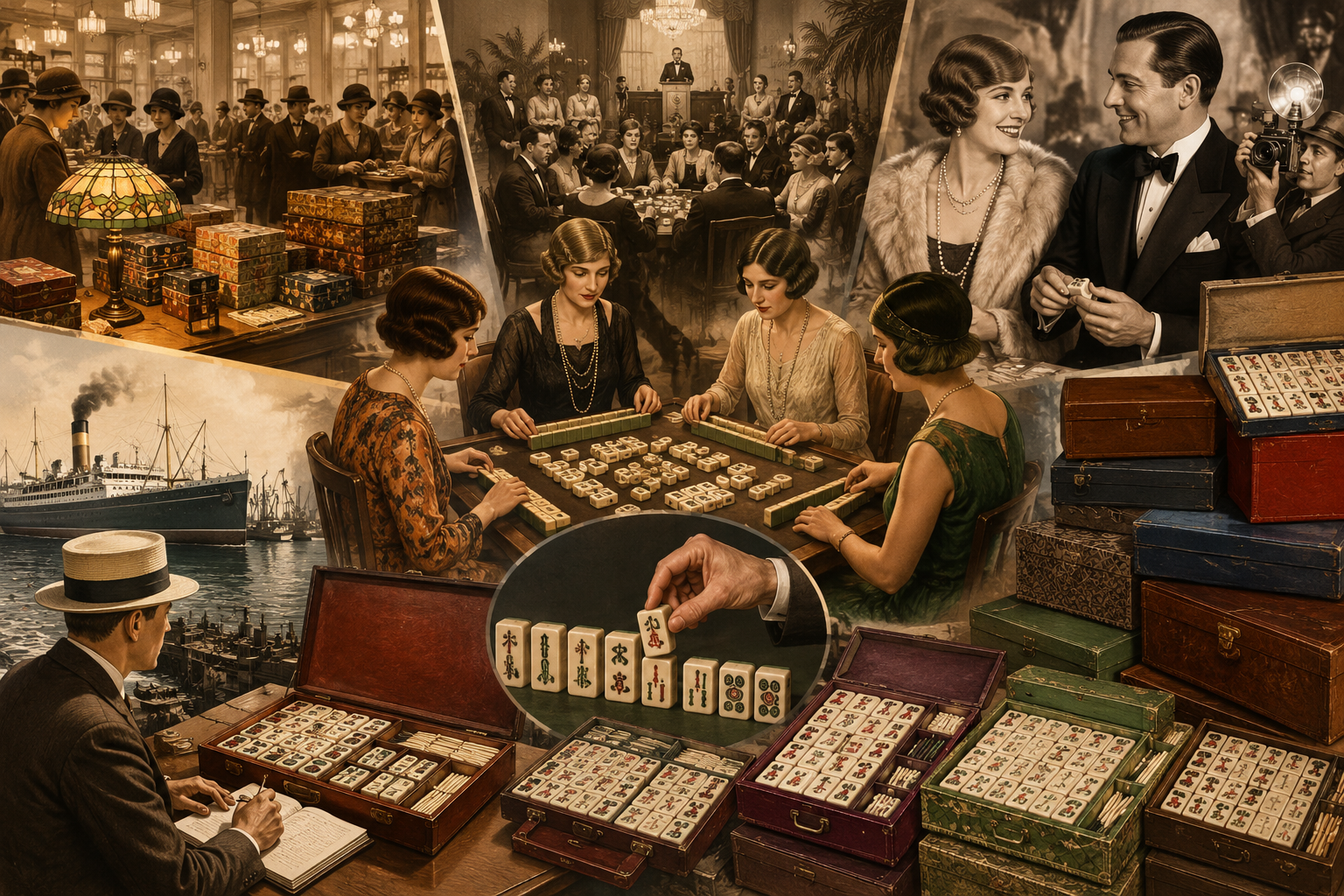
The game arrived in the United States around 1920 and exploded into a full-blown national craze by 1923–1924. Department stores couldn't keep sets in stock. Celebrities played publicly. Hotels hosted tournaments. But the importers, game manufacturers, and journalists who introduced it to American audiences all spelled it differently.
A Standard Oil employee named Joseph P. Babcock, working in Shanghai, played a central role. He standardized simplified rules for Western players and used the spelling Mah-Jongg — trademarking it through the American game distributor W.A. Hammond. The double G was deliberate: English speakers who saw "Mah Jong" tended to soften the final G, but the Chinese pronunciation calls for a hard stop. Adding the second G made that hard sound harder to miss.
Despite Babcock's trademark, competing sets hit shelves labeled "Mah Jong," "Ma Jong," "Mahjongg," and even "Pung Chow." No single version dominated — and that's how the spelling war began.
The Major Spellings Today
When the National Mah Jongg League (NMJL) was founded in New York in 1937, it adopted Mah Jongg — two words, double G, both capitalized — as the official spelling of the American game. The NMJL governs American Mah Jongg and publishes the annual card of winning hands used by players across the country. This is the spelling on NMJL rulebooks, tournament materials, and the card itself. It's the standard we follow at The Mahjongg Gallery.
Mahjong — one word, single G — has become the dominant spelling internationally, particularly for the Asian game and in digital contexts. It aligns more closely with modern pinyin romanization of Mandarin Chinese and is used by the World Mahjong Organization, most computer games, and nearly all online platforms. Importantly, the international game differs significantly from American Mah Jongg in its tile sets, rules, and scoring — so this spelling difference can actually signal which version of the game is being discussed.
Mah Jong and the hyphenated Mah-Jong are the earliest Western romanizations, common in newspapers, rulebooks, and game sets from the 1920s craze. They're still seen in British English and in references to historical sets and antique tiles. Many longtime players who learned the game decades ago continue to use these spellings naturally — they reflect the era when the game first arrived in the West, before any standard had settled.
Mahjongg — one word, double G — is a widely used informal hybrid that combines the compactness of "Mahjong" with the hard-G emphasis of "Mah Jongg." It has no official organizational backing but appears frequently online, in social media, and in contexts where a space or hyphen would be awkward (URLs, hashtags, usernames). You'll find it used interchangeably with the other spellings by American players who want to preserve the double G without the two-word format.
Does the Spelling Actually Matter?
For casual conversation, no — everyone understands what you mean regardless of which version you write. But spelling can carry real information:
- Which game you play."Mah Jongg" is strongly associated with the American game under NMJL rules. "Mahjong" more often signals the Asian game, a tile-matching computer solitaire, or the international competitive game — all of which have different rules and tile sets.
- Generational &
regional context.Players who learned from older family members or in East Coast Jewish communities (where American Mah Jongg has deep roots) tend to use "Mah Jongg" or "Mahjongg." Players introduced to the game through apps or the Chinese community often use "Mahjong." - Formality & affiliation.In official NMJL materials, tournament announcements, and club communications, "Mah Jongg" signals alignment with the American rules and tradition.
At The Mahjongg Gallery we use Mah Jongg in titles and headings — honoring the NMJL standard — and mahjongg as a one-word shorthand in running text. Either way, the game is the same: 152 tiles, a card, four players, and a whole lot of fun.