Learn American Mahjongg in Reading, MA — Beginner Lessons
Start Learning Mahjongg
Master the fundamentals of American Mahjongg. This guide covers everything a new player needs — from the tiles in your hand to reading the card and making your first exposure.
American Mahjongg is a four-player tile game that blends skill, strategy, memory, and a little luck. Each player begins with a rack of tiles and takes turns drawing and discarding while trying to match one of the hands shown on the current National Mah Jongg League card. Players may call certain discarded tiles to complete combinations, but every discard also gives opponents information. Jokers can substitute for most tiles in sets, adding flexibility and strategy. The first player to complete a valid hand by matching a card combination calls “Mah Jongg!” and wins the game.
A standard American Mahjongg set contains 152 tiles grouped into several families. Learning to recognize each family quickly is your first milestone as a new player.
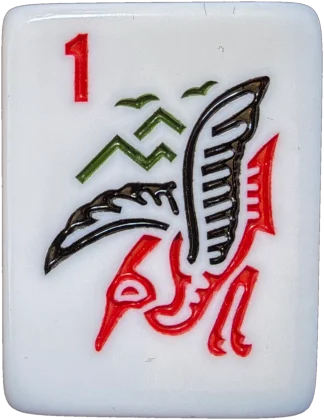
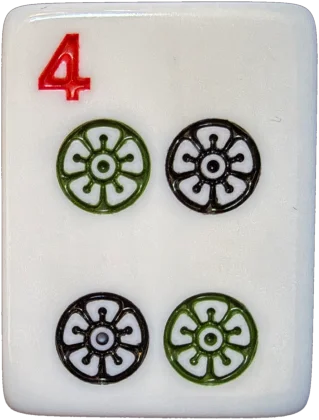
Suits (108 tiles)
Three suits — , , and — numbered 1–9, with four copies of each. These are the core tiles you will build most hands with.
Winds & Dragons (28 tiles)
Four tiles (North, South, East, West) and three tiles (Red, Green, Soap/White), each appearing four times. Essential for many card hands.
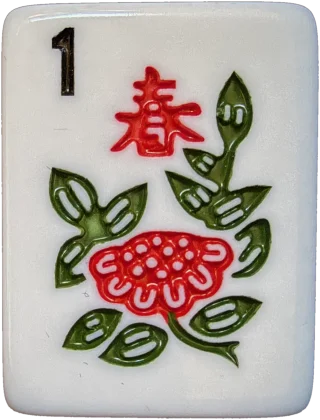
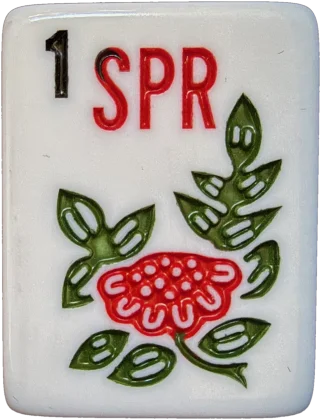
Flowers (8 tiles)
Eight uniquely illustrated Flower tiles numbered 1–4 in two sets. They appear on many card hands and are often used in certain combinations.
Jokers (8 tiles)
Eight wild Joker tiles — unique to American Mahjongg. They can substitute for any tile within an exposed set of three or more identical tiles. Covered in detail in Section 4.
The rack is your personal tray that holds your tiles upright and hidden from other players. Managing your rack efficiently — and keeping it tidy — is a habit every good player develops early.
Starting the Game
At the start of each hand, tiles are dealt from the wall — East receives 14 tiles, all other players receive 13. Your first job is to sort your rack into groups that help you spot potential hands on the card.
Organizing Your Tiles
Most experienced players sort by suit left to right (Bam · Crak · Dot) with Honors (Winds, Dragons, Flowers, Jokers) grouped separately. This lets you scan the card quickly and spot hands that match what you are holding.
Drawing & Discarding
On your turn you draw one tile from the wall and either keep it (discarding another tile face-up to the center) or discard it immediately. Play moves clockwise. Any player can claim a discarded tile for a completed exposure or for Mahjongg — but not simply to add to their rack.
Rack Design
The four posts with black rubber caps found on some American Mahjong racks are chip holders. They were designed to hold plastic scoring chips used instead of coins. Most modern American players use cash or don’t wager at all. In recent years, they’ve gained a second, much more useful purpose:
- They serve as attachment points for “Helping Hands” or wall pushers.
- The pusher clips onto the four posts and lets you push your wall of tiles toward the center of the table without moving your rack or knocking over your tiles.
The Charleston is a tile-exchange ritual unique to American Mahjongg that takes place before play begins. It gives every player a chance to shed unwanted tiles and draw closer to a viable hand.
1st Charleston
Pass 3 tiles to the right · Pass 3 tiles across · Pass 3 tiles to the left. All passes are mandatory.
2nd Charleston
A second Charleston is optional — if all four players agree, repeat the same three-pass sequence in reverse direction.
The Courtesy Pass
After both Charlestons (or just the first if the second is declined), players may offer a Courtesy Pass — an optional exchange of 1, 2, or 3 tiles with the player across the table. Both players must agree on the number of tiles to swap.
Tip: Always pass your least useful tiles. Never pass Jokers — they are too valuable.
↑ TopJokers are the most powerful — and most misunderstood — tiles in American Mahjongg. Knowing their rules precisely separates confident players from hesitant ones.
What a Joker Can Do
A Joker may substitute for any tile within an exposed set of three or more identical tiles (a Pung, Kong, Quint, or Sextet). They are therefore most valuable in large sets.
What a Joker Cannot Do
- Jokers cannot be used in a pair.
- Jokers cannot be used in a single-tile set.
- Jokers cannot be passed in the Charleston.
Joker Exchange
On your turn, before drawing from the wall, you may exchange a Joker from any opponent’s exposed set provided you replace it with the exact tile it is substituting. The Joker then comes to your rack.
You can also use this strategy to replace a joker that you have exposed in your own hand!
When you claim a discarded tile to complete a set required by your chosen hand, that set is placed face-up on your rack — this is called an exposure. It commits you to that hand and reveals your strategy to other players.
Pung
3 identical tiles (may include Jokers)
Kong
4 identical tiles (may include Jokers)
Quint / Sextet
5 or 6 tiles — only possible with Jokers filling extra spots
Key Rules to Remember
- You may only claim a discard for an exposure — never just to hold a tile.
- After claiming a discard, you must discard one tile from your rack before play continues.
- Once exposed, a set cannot be changed — choose your hand carefully.
- Any player can claim a discard for Mahjongg, regardless of turn order.
The National Mahjongg League (NMJL) card is published each year and lists every valid winning hand for that year. No hand outside the card is a legal win. Learning to read it quickly is perhaps the single most important skill for a new player. A sample of card can be seen .
When the NMJL Card is purchased, the price includes one year of . The membership year runs from April 1 through March 31 of the following year. The Annual Card can be purchased directly from the NMJL Official Site, (Note: Other sites e.g. Amazon often offer it at cheaper price especially later in the year.). The card is published in two sizes (Standard & Large). Both have identical information just different font sizes.
Anatomy of a Hand
Each line on the card shows one complete hand. Reading left to right:
- Category name — hands are grouped by theme (e.g. “2026,” “Consecutive Run,” “Like Numbers”)
- Tile notation — the exact tiles needed, in order. Sets are separated by spaces.
- C / S marker — C (Closed) means no exposures allowed; S (Singles & Pairs) means no Jokers permitted
- Point value — listed at the right edge (25, 30, 35, etc.)
Common Shorthand
| Symbol | Meaning | Example |
|---|---|---|
| F | Any Flower tile | FF = two Flowers |
| N S E W | Wind tiles | NEWS = one of each Wind |
| D | Any Dragon (Red, Green, Soap) | DDD = three Dragons |
| any suit number | Tiles from Bam, Crak, or Dot | 1111 = four 1s (same suit) |
Strategy Tips for New Players
- At the start of each hand, scan the card for 3–4 hands that match your tiles before committing to one.
- Favor hands near the top of the card — they tend to appear more frequently year to year.
- A Closed hand scores the same as an Open hand but is harder to achieve — only attempt it if you already hold most of the tiles.
- Keep track of tiles that have been discarded; if four of a tile you need are gone, abandon that hand.
Ready to Play Your First Hand?
Join us at The Mahjongg Gallery and put everything you have learned into practice at one of our regular sessions.