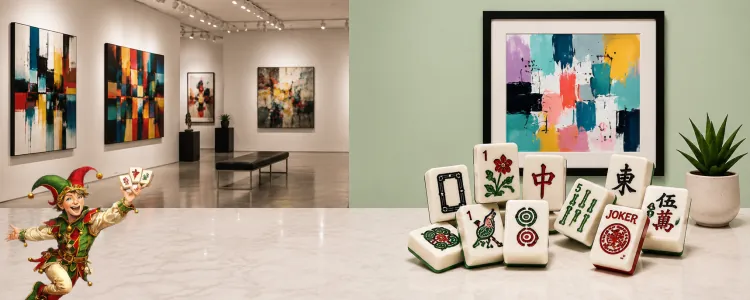
The Sound of the Game: Why Mahjongg Isn’t a Quiet Hobby
Ask any longtime player what they love about mahjongg, and you might expect answers about strategy, friendship, or the satisfaction of a well-built hand. But mention the sounds of mahjongg, and watch faces light up. There’s something about the clack of tiles, the rhythmic shuffle, and the buzz of table talk that makes this game feel alive in a way few other pastimes do.
The Clatter That Announces the Game
Long before you see a mahjongg game in progress, you often hear it. Tiles clicking against each other as they’re mixed, racks sliding across the table, someone calling out a discard. That distinctive clatter is practically a signature sound of clubs, community centers, and living rooms everywhere. It’s a sound that says, gather round, something fun is happening here.
Traditional mahjongg sets were designed with this in mind. Bakelite and bone tiles produce a satisfying, sharp click that plastic just can’t quite replicate. Many players say part of the appeal of a nice tile set is exactly that sound. It’s tactile and audible all at once, which makes the game feel more substantial than simply moving pieces around a board.
The Rhythm of Building the Wall
Building the wall is its own little performance. Everyone mixing and stacking tiles at the same time creates a wave of sound that rises and falls as each player finishes their section. Regular players develop a kind of internal clock from this ritual. You can often tell how close the table is to being ready just from the changing pitch and pace of the noise.
For newer players, this part can feel a little chaotic at first. But give it a few sessions, and the sound becomes comforting rather than confusing. It’s one of those small things that signals you’re settling into the rhythm of the game.
Voices Around the Table
Of course, mahjongg isn’t only about tile sounds. The conversation is just as much a part of the experience. Some tables are fairly quiet and focused, with players concentrating hard on their hands. Others are lively, full of laughter, gossip, and good-natured teasing about a slow discard or a surprising win.
Calling out a discard is its own small ritual too. There’s a certain confidence in saying a tile out loud, and a certain suspense in waiting to see if someone calls for it. That verbal exchange, layered on top of the physical sounds of the tiles, gives mahjongg a soundtrack all its own.
Why It Matters More Than You’d Think
For many players, especially those who play regularly with the same group, these sounds become tied to memory and comfort. The clatter of tiles might remind you of a parent’s kitchen table, a weekly game with old friends, or a lively afternoon at your club. Sound has a way of anchoring us to good experiences, and mahjongg offers plenty of them.
It’s also worth noting how different this is from so many quiet, screen-based hobbies. Mahjongg asks you to be present, to listen, and to engage with the people and tiles in front of you. That sensory richness is part of why so many players describe game day as something they genuinely look forward to, not just another item on the calendar.
A Game Best Heard, Not Just Played
So the next time you sit down at the table, take a moment to notice the sounds around you. The clicking tiles, the sliding racks, the chatter and laughter. It all adds up to something special, a game that engages your ears just as much as your mind. That’s part of the charm, and part of why mahjongg keeps drawing people back, week after week.